
Complete Guide

AEO Agency: What AEO Is, What an Agency Does, and How to Choose One

AEO (Answer Engine Optimisation) is the discipline of structuring content to appear in AI-generated answers — Google AI Overviews, ChatGPT, Perplexity, Copilot. This page explains what AEO is, what an AEO agency does, how it differs from SEO and GEO, and the questions to ask before hiring one.

3 min read 589 words Updated Apr 2026
AEO Agency Services

AEO (Answer Engine Optimisation) is the practice of structuring content so it is retrieved and cited by AI-powered answer engines — Google AI Overviews, ChatGPT Search, Perplexity, and Microsoft Copilot. An AEO agency applies this discipline systematically: auditing content for extractability, optimising structure for AI retrieval, building the entity signals that answer engines use to verify a business before citing it, and measuring citation frequency across platforms. AEO is distinct from traditional SEO but builds on the same technical foundations.

+100% year-on-year growth in UK searches for "aeo agency" — doubling from a low base, driven by businesses encountering AI search and seeking agencies with specific AEO capability rather than generic digital marketing Google Keyword Planner, UK, March 2025–February 2026
14.2% conversion rate for AI-cited traffic versus 2.8% for standard organic — the commercial case for AEO, showing that being cited in an AI answer produces 5x higher-quality traffic than ranking in a traditional results list Seer Interactive, LLMrefs, 2025
92.1% of AI citations in consumer electronics came from third-party authoritative sources rather than the brand's own content — confirming that AEO requires off-site editorial work alongside on-site content optimisation University of Toronto, 13 industries, September 2025

What AEO Actually Means in Practice

AEO agencies work on the specific layer where most SEO efforts have not historically focused: the passage-level content quality that determines whether an AI system extracts and cites your content in a generated answer. Traditional SEO gets your page into the retrieval pool — indexed, crawlable, authoritative enough to be considered. AEO determines whether your content, once retrieved, is structured so AI systems can extract a specific passage, attribute it to your organisation by name, and include it in a generated answer rather than discarding it and moving to the next candidate.

The distinction matters because retrieval and citation are different outcomes with different revenue implications. A page can rank #1 in Google and be retrieved by Google AI Mode without ever appearing in the AI Overview — because the content, while good enough to rank, is not structured so individual sections can be extracted and cited independently. An AEO agency addresses the gap between “retrieved” and “cited.”

What an AEO Agency Should Actually Do

Content extractability audit. Every section of every priority page assessed against the six citation criteria: standalone opening answer (C1), explicit definitions (C2), specific attributed statistics (C3), named sources (C4), declared entities (C5), and an attributable claim (C6). Sections that fail one or more criteria get specific rewrite guidance, not vague recommendations to “improve quality.”

Entity corroboration build. The University of Toronto found that 92.1% of AI citations came from third-party sources, not the brand’s own content. An AEO agency that only works on your website is optimising 8% of the problem. The off-site corroboration layer — review platforms, editorial mentions, Wikidata, professional directories, Clutch/G2 — determines whether AI systems trust your entity enough to cite it. This is the work most SEO agencies avoid because it is slower and harder to attribute. It is also where most of the AI citation improvement comes from.

Schema markup implementation. JSON-LD schema at the page and section level tells AI systems what type of content they are looking at, who created it, and what it claims. Pages with Article schema and named author credentials are cited at significantly higher rates than equivalent pages without it. An AEO agency implements schema systematically rather than as a one-off technical task.

Platform-specific citation monitoring. AEO is not a single target — each platform (Perplexity, Google AI Overviews, ChatGPT, Copilot) retrieves from different source pools and uses different citation mechanisms. An AEO agency monitors citation frequency across all relevant platforms and diagnoses which platform-specific gaps exist. The platform comparison covers the technical differences. The AI Visibility Audit applies the diagnostic to a specific site.

What to Ask an AEO Agency Before Hiring

The questions that separate an agency with genuine AEO capability from one that has rebranded their existing SEO service with AI vocabulary: Can you show me a page you have optimised that now appears in Google AI Overviews for a specific query — and show me both the before and after content? What citation standard do you optimise to, and what are the specific criteria? What do you do for the off-site entity corroboration that the University of Toronto data shows drives 92% of AI citations? How do you measure citation frequency across multiple platforms, not just Google? What is your process when a client’s content gets retrieved but not cited — how do you diagnose which criterion is failing?

If the answers are vague, the agency is selling AEO positioning rather than AEO capability. For how SEO Strategy Ltd approaches AEO specifically, see LLM Optimisation services and the CITATE framework.

Key Definitions

AEO (Answer Engine Optimisation)
the practice of structuring web content and building entity signals so that AI-powered answer engines (Google AI Overviews, ChatGPT, Perplexity, Copilot) retrieve, extract, and cite the content in generated responses. AEO encompasses content structure (CITATE), entity corroboration, schema markup, and platform-specific retrieval optimisation.
AEO vs SEO vs GEO
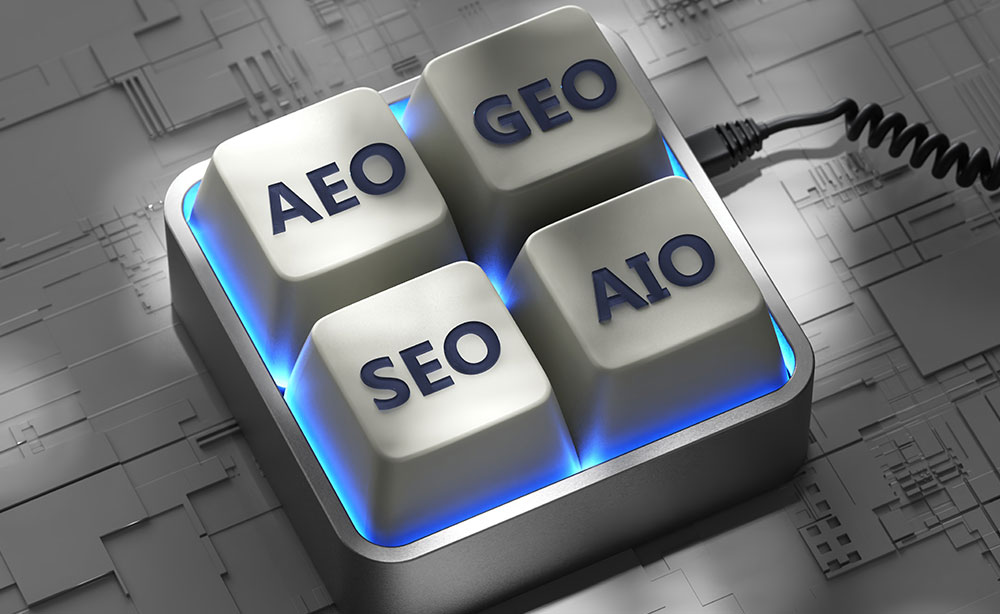
SEO targets traditional search engine rankings. GEO (Generative Engine Optimisation) is a broader term for optimising for generative AI platforms as a category. AEO specifically focuses on the answer-generation layer — the point where AI systems decide which content to extract and cite. All three share technical foundations; AEO adds the content extractability and entity verification requirements that AI citation specifically demands.
citation eligibility threshold
the minimum content quality and entity corroboration level required for an AI system to include a source in a generated answer. Below the threshold, content may be retrieved but not cited. Above it, content is actively extracted and attributed. The CITATE framework defines the six criteria that determine whether a page has crossed this threshold.

Frequently Asked Questions

What is the difference between an AEO agency and an SEO agency?

An SEO agency optimises for traditional search rankings — crawlability, keyword targeting, backlinks, technical performance. An AEO agency additionally optimises for AI citation eligibility: content structured so AI systems can extract and cite specific passages, entity signals that AI systems use to verify a business before naming it, and monitoring across AI platforms rather than just Google. Many SEO agencies now claim AEO capability. The test is specificity: can they name the content criteria they optimise to, and can they show citation results that did not exist before their work?

How much does an AEO agency cost?

AEO agency pricing varies significantly. A content extractability audit for a 50-page site typically costs £2,000–£5,000 depending on depth. Ongoing AEO retainers — covering content optimisation, schema implementation, entity corroboration build, and monitoring — typically range from £1,500–£5,000 per month for SME clients. At SEO Strategy Ltd, we operate at £600–£900 per day for direct consultancy work. The more important question is not the agency cost but the revenue impact: a single additional AI citation in a competitive B2B category can generate pipeline that dwarfs the retainer cost.

Can I do AEO myself without an agency?

Yes, with the right framework. The CITATE criteria (C1–C6) are publicly documented and can be applied to any page manually. The AI Citation Checklist provides a section-level audit tool. The technical elements — schema markup, robots.txt configuration, Bing Webmaster Tools — are documented in our guides. Where an agency adds value is in systematic implementation across a large site, the off-site entity corroboration work that requires editorial relationships, and the ongoing monitoring that most in-house teams do not have the bandwidth for.

Is AEO a replacement for SEO?

No. AEO builds on SEO foundations — a site that is not indexed, not technically sound, and not authoritative enough for AI systems to trust will not benefit from AEO work. SEO is the prerequisite. AEO is the additional layer that converts existing SEO performance into AI citation presence. The businesses that win in AI search are not the ones that abandoned SEO for AEO — they are the ones that added AI-specific layers on top of strong SEO foundations.

Sean Mullins

Founder of SEO Strategy Ltd with 20+ years in SEO, web development and digital marketing. Specialising in healthcare IT, legal services and SaaS — from technical audits to AI-assisted development.

Ready to improve your search visibility?

Book a free 30-minute consultation and let's discuss your SEO strategy.

Get in Touch